
Chinese Tuition for Preschool gives young children a gentle, structured start with Mandarin before Primary 1 pressure kicks in. It uses songs, stories, and simple reading so tones and words feel natural, not scary. Parents usually see the biggest change when tuition links to daily life at home. With the right centre and simple home habits, preschoolers build confidence that can last for years.
- Early Mandarin exposure between ages three and six builds clear tones and listening skills. Young brains pick up new sounds quickly and store them deeply. According to the Harvard Center on the Developing Child, more than one million new neural connections form every second in the early years. That natural speed makes this window very hard to replace later.
- Singapore’s bilingual policy means most children must handle both English and Chinese. Many homes speak mainly English, which widens the gap before Primary 1. The 2020 Census by the Singapore Department of Statistics reported that about 48 percent of resident households used English most often at home, and population-level data on household language variation illustrates how limited non-English home exposure can widen language gaps before formal schooling begins. Preschool Chinese tuition closes that gap long before grades enter the picture.
- The best preschool Chinese programmes are small, playful, and MOE‑aligned. They focus on speaking, listening, and simple characters rather than heavy worksheets. Centres like Yu Cai Education Centre design lessons around stories, conversations, and reading games. That mix helps children look forward to class.
- Home support doubles the effect of Chinese Tuition for Preschool. Short daily habits such as reading a picture book, watching a Mandarin cartoon, or using new words during meals add up fast. Research reviewed by the National Early Literacy Panel links shared reading with stronger language skills. Ten minutes a day often beats one long weekly cram session.
“For young children, frequent short exposures to a language build deeper skills than rare long study blocks.” — Summary of findings from the National Early Literacy Panel
Why Early Chinese Tuition For Preschool Matters In Singapore
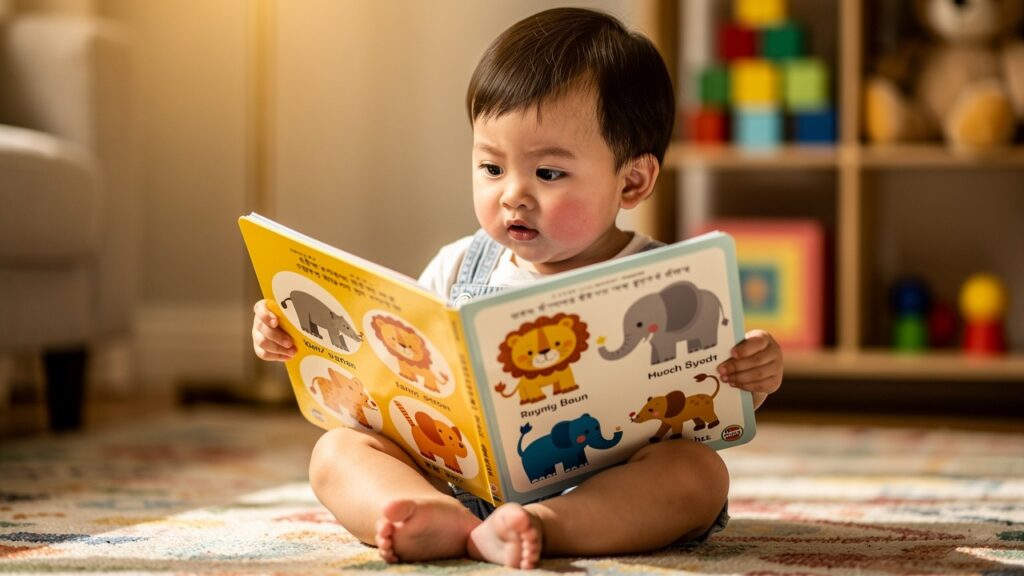
Early Chinese tuition for preschool children matters because the brain is most ready for languages between ages three and six. Starting in that window makes Mandarin tones, sounds, and basic words feel natural instead of foreign. For families in Singapore planning the MOE route, that early start usually works better than waiting until primary school.
Neuroscience explains why. In the first few years of life, more than one million new neural connections form every second according to the Harvard Center on the Developing Child. By around age five, about 90 percent of brain development has already taken place, a trajectory further supported by studies on brain age prediction and normative developmental patterns in early childhood. A child who hears and uses Mandarin during this period builds sound patterns that are very hard to copy later.
Singapore’s bilingual policy adds another layer. Every child in national schools must study a Mother Tongue language, and Chinese has clear expectations from Primary 1. For children from English‑dominant homes, this can feel like stepping into a new world on the first day of school. Chinese Tuition for Preschool fills that gap early, with simple stories, songs, and class routines that feel friendly instead of stressful.
There is also an emotional side. Many parents remember their own stress with spelling lists, 听写, or oral exams. When a preschooler already knows common words, can greet the teacher confidently, and has heard basic stories many times, Primary 1 Chinese feels familiar. That confidence protects your child’s mindset, not just grades.
Does that mean every three‑year‑old must attend Chinese tuition? Not quite. The best moment is when your child can:
- Sit for 20 to 30 minutes
- Follow simple group instructions
- Show curiosity about words, pictures, or songs
At that point, choosing Chinese Tuition for Preschool usually gives a softer, safer start than waiting for the much heavier primary curriculum.
What Does Preschool Chinese Tuition Actually Cover?
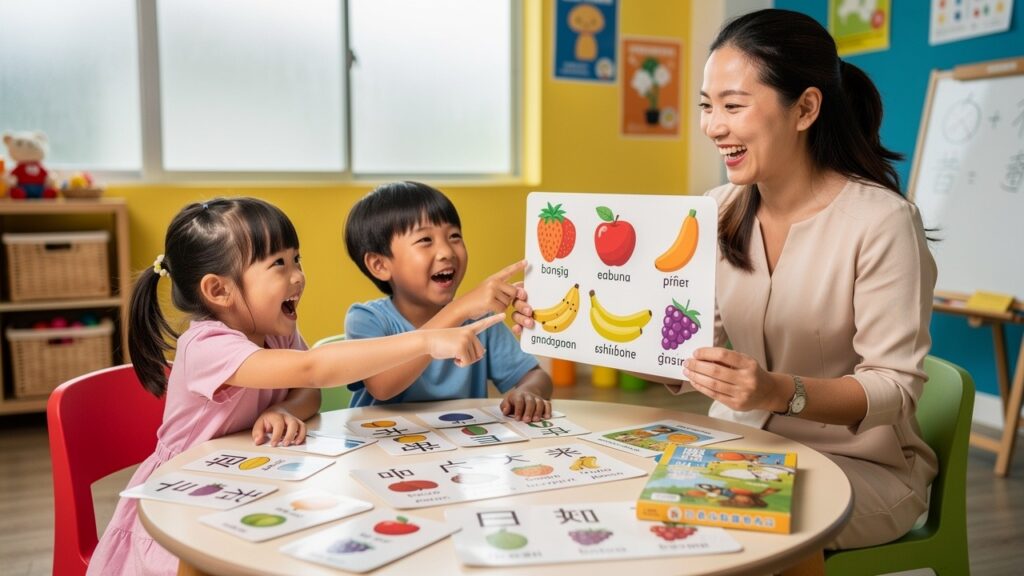
Preschool Chinese tuition usually covers five big areas that prepare children for Primary 1. The focus stays on understanding and use, not on exams.
Typical areas include:
- Spoken Mandarin and tonal awareness
Most centres begin with listening and speaking. Children hear songs, rhymes, and stories that highlight the four tones. Teachers correct gently through games and repetition, so proper tones become a habit. Research summaries from the American Council on the Teaching of Foreign Languages note that native‑like pronunciation is most reachable when a second language starts early. - Vocabulary through meaningful themes
Next comes vocabulary built around themes such as family, food, school, animals, and feelings. Instead of dry word lists, teachers use:- Picture cards
- Role play
- Small group chats
- Simple class routines
- For example, children may “order” pretend food in Mandarin or describe the weather before every class. These small habits turn words into real use.
- Early reading with Hanyu Pinyin and basic characters
Many preschool programmes start Hanyu Pinyin for K1 and K2 children. This phonetic system helps children match sounds they already know to written forms. At the same time, children see and recognise common characters on posters, charts, and book covers. By the time Primary 1 arrives, characters no longer look like random strokes. - Listening comprehension
Children listen to short stories, instructions, and simple dialogues. They learn to respond with actions or brief answers, building the skills they will later need for classroom learning and test instructions. - Oral expression and confidence
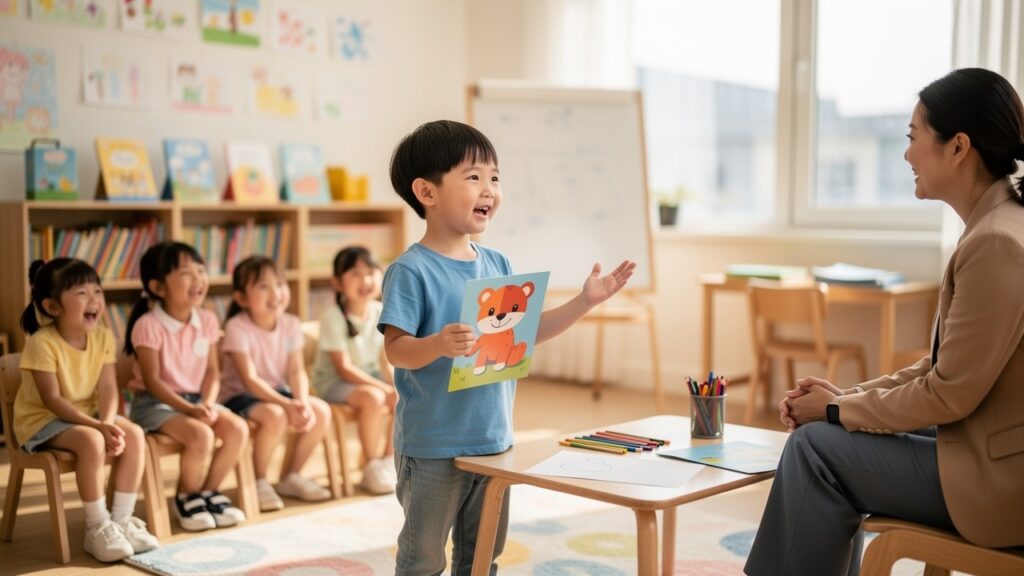
Listening skills are paired with speaking practice. Children answer simple questions, retell short stories with picture aids, and do show‑and‑tell in Mandarin. These activities mirror oral tasks that appear later in PSLE, only in a friendly, age‑appropriate way.
“The best preschool language classes feel like play on the surface, but every game is chosen for a clear language goal.” — Common advice from early childhood language educators
How Yu Cai Education Centre Structures Preschool Learning
Yu Cai Education Centre designs its preschool programmes so children feel that Mandarin is fun, engaging, and within reach. Its N2 Fun Reading and Writing classes welcome four‑year‑olds into a world of big pictures, simple characters, and playful handwriting practice. Lessons move in small steps, so even shy children see quick progress and gain confidence.
From K1 to K2, Yu Cai’s Fun Reading and Writing track builds a clear path toward Primary 1. Children meet themed vocabulary, short sentences, and basic Pinyin in a steady sequence. Teachers use stories, actions, and reading games rather than dry drills. That balance keeps the focus on understanding and real use, not just copying characters.
Yu Cai also understands the busy lives of North Singapore families. With centres in Woodlands, Yishun Town Square, Northpoint City, and Seletar Mall, many parents can reach class within a short bus ride. Free trial lessons let you see how your child responds before you commit, which lowers both cost risk and emotional worry.
Beyond preschool, Yu Cai offers:
- Primary 1 preparation
- Primary 1–6 Comprehensive Learning
- Higher Chinese for P5–P6
- Creative Writing for P3–P6
- Secondary and O‑Level Chinese programmes
This means children who start early can continue in a familiar environment as they grow.
Clear online information about Yu Cai’s programmes, locations, and trial lessons helps parents understand whether the centre is the right fit before they commit.
How To Choose The Right Chinese Tuition Centre For Your Preschooler
Choosing the right centre for Chinese Tuition for Preschool means looking at more than glossy posters. Parents get the best fit when they check teacher quality, class size, curriculum, teaching style, and trial options. Each factor affects how your child feels the moment they step into class.
Key points to look at:
- Teacher background and warmth
Look for educators with early childhood or Chinese language qualifications and clear experience with young children. During a trial, notice if the teacher gets down to the child’s eye level, uses humour, and manages the group calmly. Children learn better when they feel safe with the adult at the front of the room. - Class size and attention
A preschooler cannot hide in a group of five the way they can in a group of 15. Small classes allow the teacher to hear each child speak and correct tones quickly. Many parents find a ratio of about one teacher to five or six children gives a good mix of attention and social interaction. - Curriculum that matches Singapore’s MOE path
Ask how the centre prepares children for Primary 1 Chinese without turning lessons into mini exam factories. A good preschool curriculum focuses on listening, speaking, and simple reading while still using vocabulary that will appear in school books later, a structure consistent with findings from exploration of childcare service design for young children in structured early learning settings. - Teaching style and classroom energy
Play‑based does not mean messy or random. In Yu Cai Education Centre, for example, games, songs, and story time follow a clear learning aim each week. You should see children moving, answering, and laughing, but also revisiting words and characters often. If lessons are only worksheets, that is a warning sign for this age. - Schedule, location, and budget fit
Parents also need a format that fits family routines and cost. When centres invest in clear online communication, including honest pricing and class details, they show they respect parents’ time and decision process.
Use the quick table below to weigh format options:
| Format Type | Best For | Typical Cost In Singapore | Pros | Possible Limits |
| Group classes at centres | Children who enjoy peers and routine | Around SGD 150 to 350 per month | Social setting, steady schedule, usually MOE‑aligned | Less individual focus, fixed timing |
| Private one‑to‑one | Children who are very shy or need extra help | Around SGD 35 to 150 per hour | Fully personalised pace, flexible timing | Higher overall cost, fewer peers to speak with |
| Online live classes | Families who need flexibility or live far from centres | Around SGD 30 to 80 per session | No travel time, wide choice of tutors | Screen fatigue, more parent setup support needed |
When you visit or attend a trial, focus less on fancy walls and more on your child’s face when class ends. As many early childhood experts remind parents, the strongest sign of a good preschool Chinese class is a child who wants to return next week.
Tip: After the trial, ask your child to “show” you what they did in class. If they can sing a song, say new words, or describe an activity in Mandarin, that is a very positive sign.
How To Reinforce Chinese Learning At Home Between Tuition Sessions
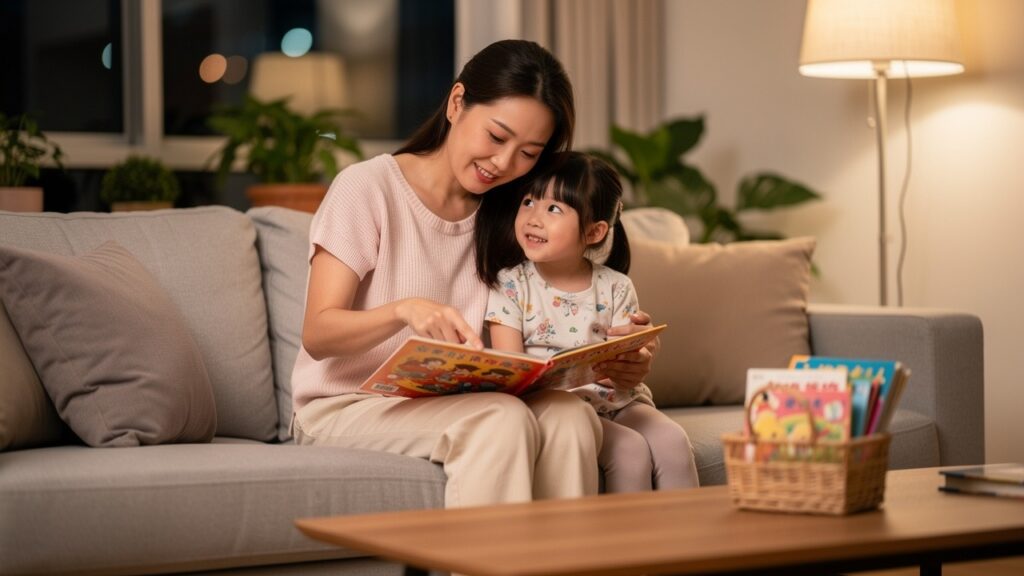
Home practice turns one or two weekly tuition sessions into daily Mandarin touch points. Children progress fastest when tuition content connects with songs, books, and chats at home. The good news is that this does not need hours of drilling each night.
Start by making your home slightly more Mandarin‑rich:
- Label common items such as door, table, and fridge with simple Chinese words and Pinyin.
- Play Mandarin children’s songs during breakfast or car rides.
- Keep a small basket of Chinese or bilingual books in the living room.
These small changes give extra listening practice without your child even sitting at a desk.
Reading together is one of the strongest language habits you can build. Borrow bilingual or Chinese picture books from National Library Board branches across Singapore. Research reviewed by the National Early Literacy Panel links shared reading with better vocabulary and later reading skills. Even ten minutes on most evenings can support what your child hears in Chinese Tuition for Preschool.
Short, playful activities work better than long lectures. Here are habits many Yu Cai parents use successfully:
- Play simple vocabulary games for five to ten minutes. You might hold up picture cards and let your child “teach” you the words, or play a matching game between characters and objects. This light, playful style keeps energy positive. Regular tiny sessions beat rare long battles.
- Use Mandarin during daily routines whenever possible. Try counting steps to the lift, naming foods at dinner, or using Mandarin phrases for “thank you” and “good night.” Children see Mandarin as a living language, not just a subject. Your own accent does not have to be perfect for this to help.
- Add Mandarin screen time with care. Shows like Peppa Pig in Chinese or Super Wings in Chinese give extra listening input. Watch together sometimes so you can repeat phrases later. Set clear time limits so screens support learning instead of taking over the day.
- Stay in touch with your child’s teacher. Ask what themes or word sets are covered each week. Then repeat those words at home in your own way. At Yu Cai Education Centre, teachers often share short notes or photos, which makes it easier for parents to follow up.
Parents who build these small home routines often see better class results and stronger long-term interest because Mandarin becomes part of daily life, not just a weekly lesson. The pattern is simple: tuition opens the door, and home habits keep the door open.
Frequently Asked Questions
Question: At what age should my child start Chinese tuition in Singapore?
Answer: Most children are ready around ages three and a half to four, once they can sit for about twenty minutes and follow group instructions. If your child is younger or very restless, start with songs, stories, and simple Mandarin chats at home before formal classes.
Question: How much does preschool Chinese tuition cost in Singapore?
Answer: Group classes usually range from about SGD 150 to 350 per month, depending on location and frequency. Private tutors charge roughly SGD 35 to 150 per hour, based on experience. Some Community Clubs and groups like CDAC offer more affordable enrichment options for families.
Question: Is group class or private tuition better for my preschooler?
Answer: Group classes suit children who enjoy peers and learn well through play. Private tuition fits children who are very shy, far behind, or need flexible timing. Many families choose a mix, using weekly group classes and short private blocks during tougher periods.
Question: How do I know if my child’s Chinese tuition is actually working?
Answer: You can tell tuition helps when your child uses Mandarin words at home, sings class songs, and shows steady gains in Pinyin or word recognition over three to six months. If your child dreads class or progress stalls for a long time, review the fit with the teacher or centre and consider a trial elsewhere if needed.
Give Your Child The Head Start They Deserve
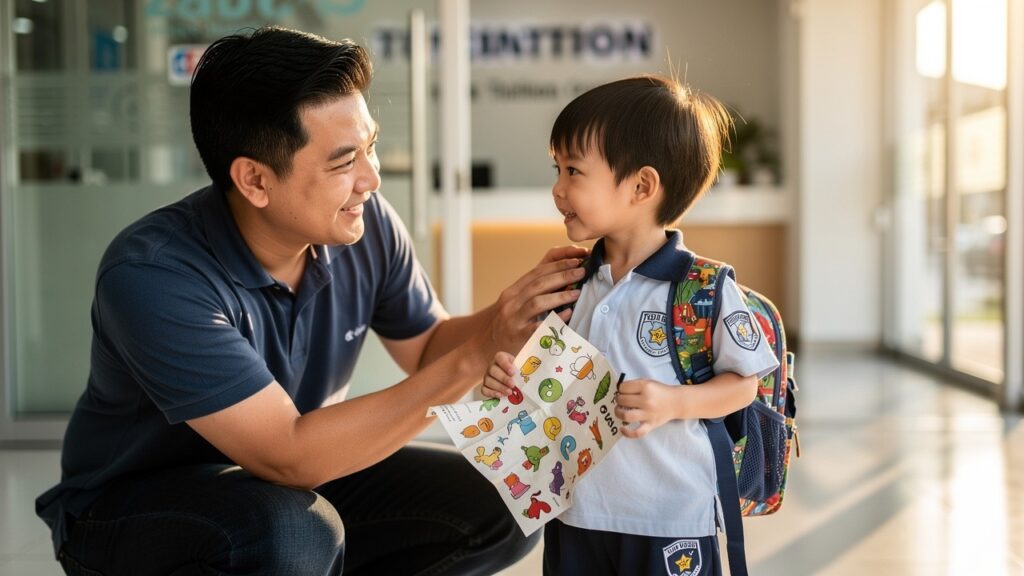
Giving your preschooler an early Mandarin head start is one of the simplest ways to ease primary school life later. Chinese Tuition for Preschool that is playful, structured, and steady builds tones, vocabulary, and confidence while school stakes are still low. The key is to pick a centre and format that match your child’s temperament.
Yu Cai Education Centre is a strong option for families in Woodlands, Yishun, and Seletar looking for Chinese tuition. Its N2 and K1–K2 Fun Reading and Writing programmes focus on joy, understanding, and gentle progression rather than fear of tests. Free trial lessons at each branch let you watch real classes, meet teachers, and see if your child feels at home.
Parents should look for education centres that pair solid classroom quality with clear, honest information about curriculum, teachers, locations, and trial lessons.When a centre communicates clearly online, parents benefit from better updates, easier booking, and a clearer understanding of what their child will learn.
Conclusion
Preschool is not too early for Chinese tuition when a child is ready. In Singapore, the combination of a strong early language window and a firm bilingual policy means that waiting until primary school often raises stress without saving much effort. Early, gentle exposure through Chinese Tuition for Preschool usually pays off in smoother primary years and a healthier relationship with Mandarin.
The path is straightforward:
- Choose a centre with warm teachers, small classes, and a curriculum that matches MOE demands while staying playful.
- Support lessons with brief daily habits at home, from picture books to short chats in Mandarin.
With centres like Yu Cai Education Centre and clear guidance from teachers, parents do not have to guess alone. A thoughtful start now can give your child years of easier learning ahead.