

Searching for a “Chinese class near me” in Singapore often begins with convenience. Parents want somewhere close to home, school, an MRT station or a route the family already travels each week.
Convenience matters, especially when a child has homework, CCAs, meals and other activities to manage. But the nearest Chinese class is not automatically the right one.
The better choice is a class that combines a manageable location with the right age level, curriculum, teacher and degree of challenge for your child.
For families in northern and north-eastern Singapore, Yu Cai Education Centre currently lists main centres at Woodlands Civic Centre, Northpoint City, The Seletar Mall and Yishun Town Square, together with additional community-based locations around Punggol and Sengkang. Yu Cai provides Chinese programmes for children aged 4 to 17, ranging from preschool and Primary 1 preparation to primary Chinese, creative writing, Higher Chinese and secondary-level programmes.
The right location will still depend on which programme is available there.
A preschooler learning to recognise characters needs a very different class from a Primary 6 student working on comprehension and composition. A secondary student dealing with longer texts, emails, oral examinations and more mature writing needs another level of support again.
This guide explains how parents can find a nearby Chinese class in Singapore, compare Yu Cai’s locations, decide how far is reasonable to travel, identify the right programme for the child’s stage and use a trial lesson to judge whether the class is genuinely suitable.
Where Can I Find Chinese Classes Near Me in Singapore?

Yu Cai currently lists Chinese-class locations across the north and north-east of Singapore.
Its four main locations are at Woodlands Civic Centre, Northpoint City, The Seletar Mall and Yishun Town Square. It also lists community-based venues around Punggol and Sengkang.
This means families searching around Woodlands, Yishun, Seletar, Sengkang and Punggol may have several options without travelling across Singapore.
However, parents should not assume that every programme runs at every location.
Class levels, schedules and vacancies can vary between centres and community venues. Before travelling, confirm that the required programme is currently available at the location you are considering.
For a “near me” search, the best process is therefore:
First find the centres that are reasonably close to your weekly routine. Then confirm which of those centres offers the correct level. Finally, compare timetable and teaching fit before choosing.
That prevents location from becoming the only deciding factor.
Yu Cai Chinese Class Locations at a Glance
Chinese Classes Near Woodlands
Yu Cai’s main office is located at Woodlands Civic Centre, 900 South Woodlands Drive, #04-04, Singapore 730900.
For families living or studying around Woodlands, this is the most direct Yu Cai location to investigate.
A Woodlands-based class can be particularly practical when the child already attends school, enrichment activities or family appointments in the area.
Parents should still confirm whether the required preschool, primary, creative-writing, Higher Chinese or secondary programme is running there at a suitable time.
Chinese Classes Near Yishun
Yu Cai currently has two listed locations in Yishun.
One is at Northpoint City, 930 Yishun Avenue 2, #03-16/17, Singapore 769098. The other is at Yishun Town Square, 3 Northpoint Drive, #01-04, Singapore 768020.
Having two Yishun options can give families more flexibility when comparing programme availability and lesson timing.
The closer outlet is not necessarily the better one if the appropriate class level is offered only at the other location.
Parents should therefore compare the actual programme timetable before deciding between the two.
Chinese Classes Near Seletar and Sengkang
Yu Cai’s The Seletar Mall location is at 33 Sengkang West Avenue, #03-17, Singapore 797653.
This may be a practical option for families living around Seletar, Sengkang West and neighbouring parts of the north-east.
Yu Cai also lists community-based classes in the wider Sengkang area, including Sengkang West Zone L RC and Compassvale Ancilla RC.
Community-class schedules may differ from the centre-based timetable, so families should verify both the programme level and current schedule before enrolling.
Chinese Classes Near Punggol
Yu Cai currently lists several community-based locations around Punggol.
These include Punggol Meridian RC, Punggol Damai RC, Punggol Parc Terrace RC, Punggol Seas RC, Punggol Jewel RC and Punggol West Community Centre.
For Punggol families, these venues may make Chinese enrichment considerably easier to fit into the week.
They should not, however, be treated as interchangeable with Yu Cai’s main centres.
Parents should confirm which programmes, levels and schedules are currently available at the specific community venue.
Is the Nearest Chinese Class Always the Best Choice?
No.
The nearest class is valuable only when the programme itself suits the child.
A class five minutes from home may be convenient, but convenience does not compensate for a level that is too easy, too difficult or poorly matched to the student’s learning needs.
The reverse is also true.
Parents do not necessarily need to travel across Singapore simply because another centre has a stronger reputation.
The better approach is to find the closest suitable class.
That means considering location and teaching fit together.
A practical order is to check programme availability first, then class level, timetable, travel burden and finally the child’s response during a trial lesson.
Location should make good learning easier to sustain. It should not become a substitute for good learning.
How Far Is Too Far for a Weekly Chinese Class?
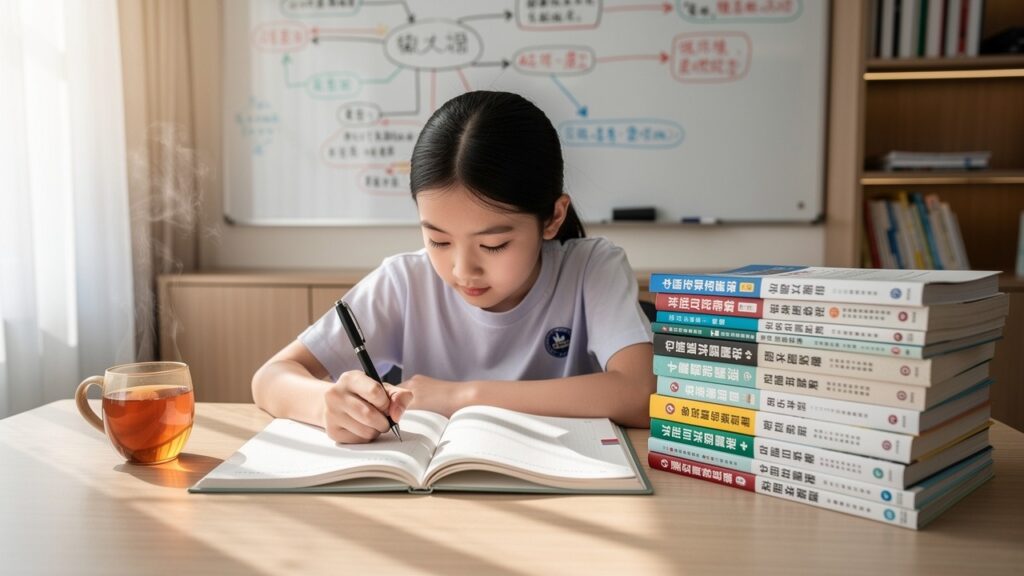
There is no ideal travelling time that applies to every family.
The journey becomes too demanding when it regularly interferes with the child’s sleep, meals, homework, school commitments or ability to arrive at class ready to concentrate.
Age matters too.
A preschool child may find a long journey tiring before a two-hour lesson even begins. An upper-primary or secondary student may already be travelling between school, CCA and home before attending tuition.
Parents can therefore judge travel in terms of the whole weekly routine, not only the number of kilometres between home and the centre.
Ask whether the child can arrive without rushing.
Consider whether there is enough time to eat.
Think about how late the family will reach home after class.
If the journey repeatedly makes the child too tired to learn effectively, the additional travel may outweigh the benefit of choosing that centre.
A nearby programme with the correct level and a teacher who suits the child can often be easier to sustain over several years.
Which Yu Cai Location Should I Choose?
Start with the programme, not the address.
First identify what your child needs.
A four-year-old looking for introductory Chinese should not be placed according to the same criteria as a P5 Higher Chinese student.
Once the programme is clear, check which Yu Cai locations currently offer that class.
Then compare lesson timing and travel.
If two locations offer the same suitable programme, convenience becomes a useful deciding factor.
Finally, use the trial class to judge the teacher and classroom fit.
This creates a simple decision order:
Correct programme → correct level → workable timetable → manageable location → good teaching fit.
Following that sequence is more reliable than choosing the nearest outlet first and hoping the programme happens to suit the child.
What Should Parents Look for in a Chinese Class?
A good Chinese class should match both the student’s school stage and the specific reason they need additional support.
Two children with the same school grade can have very different difficulties.
One may lack vocabulary.
Another may understand Chinese but struggle to express written answers accurately.
Another may speak Mandarin confidently but find composition difficult.
The programme should therefore do more than place students according to age alone.
Parents should ask what the class covers, what becomes harder at the next level and how teachers respond when a student is significantly stronger or weaker in one component.
A clear progression matters too.
Yu Cai’s current course pathway begins with preschool programmes and Primary 1 preparation, continues through Primary 1–6 Comprehensive Learning and includes separate Creative Writing and Higher Chinese options before progressing into secondary Chinese.
This means families can consider both current needs and what the child may require later.
Which Chinese Class Is Suitable for Preschool Children?
Preschool Chinese should build familiarity, confidence and early language foundations before examination preparation becomes important.
Yu Cai’s pathway begins with N2 Fun Reading and Writing, followed by K1–K2 Fun Reading and Writing for Preschool.
At around age four, useful progress may include understanding familiar classroom instructions, recognising simple characters, responding to basic questions and becoming more willing to speak Mandarin.
Parents should not judge preschool Chinese mainly by how much written work comes home.
For younger children, willingness to participate matters enormously.
A child who previously avoided Mandarin but begins joining a story, recognising familiar characters or volunteering short phrases is developing an important foundation.
K1 and K2 learning can gradually become more structured, with stronger character recognition, vocabulary, speaking, early reading and writing.
However, preparation for Primary 1 should not turn preschool into primary-school tuition several years early.
The aim is familiarity and readiness, not acceleration for its own sake.
How Can a K2 Child Prepare for Primary 1 Chinese?
Primary 1 introduces a more structured Chinese-learning environment.
Children encounter textbook vocabulary, Hanyu Pinyin, listening activities, reading comprehension, speaking and written tasks.
Yu Cai currently offers a dedicated Preparatory for Primary 1 programme of 12–16 sessions before children progress into its Primary 1 Comprehensive Learning programme.
The purpose of preparation should be to reduce unfamiliarity.
A child does not need to race through Primary 1 before school begins.
Instead, becoming familiar with common classroom formats, vocabulary and Pinyin can allow the child to focus more attention on learning when formal primary school starts.
Parents should also remember that early preparation should support confidence.
If a programme creates anxiety before the child has even entered Primary 1, the level or approach may need reconsideration.
What Should a Primary-School Chinese Class Cover?
Primary Chinese develops several connected abilities.
Vocabulary supports reading.
Reading supports comprehension.
Speaking and listening build communication.
Writing requires children to use vocabulary and ideas accurately.
MOE’s Chinese curriculum develops listening, speaking, reading, writing and interaction, so parents should be cautious about programmes that reduce Chinese mainly to written worksheets.
Yu Cai currently provides Comprehensive Learning programmes from Primary 1 through Primary 6. It also offers dedicated Creative Writing and Higher Chinese programmes at selected upper-primary levels.
For lower-primary children, the priority is usually stronger language foundations.
As students approach upper primary, they increasingly need richer vocabulary, more precise comprehension answers, stronger composition organisation, better oral responses and greater independence.
The class should therefore become more demanding as the child progresses.
What If My Child Mainly Needs Help With Chinese Composition?
Not every child who struggles with composition is weak in Chinese overall.
Writing requires several skills at the same time.
The student has to understand the topic, generate ideas, decide what matters, organise events or arguments, select appropriate vocabulary and create a coherent ending.
Simply memorising good phrases does not solve all of those problems.
Yu Cai currently offers dedicated Creative Writing for Primary 3–4 and Primary 5–6, in addition to its comprehensive Chinese programmes.
A specialised writing class can therefore make more sense when composition is the main gap.
Parents can look for progress in the planning process as well as the final score.
Can the child explain what the composition will be about before writing?
Are paragraphs becoming more purposeful?
Are details more relevant rather than simply longer?
Is vocabulary being used naturally?
Those signs often tell parents more than whether one composition happened to receive a high mark.
When Should Parents Look for Higher Chinese Classes?
Higher Chinese requires greater depth in vocabulary, comprehension, writing, oral communication and language application.
Yu Cai currently provides dedicated Higher Chinese programmes for Primary 5, Primary 6 and Secondary 1–4.
Its Primary 6 programme, for example, includes vocabulary consolidation, summarisation, comprehension-answering methods, writing, oral expression and listening.
Higher Chinese tuition can be useful when a student is generally capable of handling the subject but repeatedly encounters a specific gap.
A child may understand the passage but leave out an important scoring point.
Another may have good vocabulary but weak composition organisation.
Another may speak Mandarin comfortably but struggle to develop formal oral responses.
Parents should therefore identify the weakness before simply looking for the hardest available class.
What Should Secondary Chinese Classes Cover in 2026?
Secondary Chinese becomes more demanding because students work with longer passages, more mature ideas and broader forms of written communication.
Yu Cai currently lists Comprehensive Learning G2/G3 for Secondary 1 and 2, Higher Chinese for Secondary 1–4 and a Secondary 3–4 programme that it continues to label “Express Chinese.”
Parents should be aware that “Express” is no longer the national secondary-school stream terminology.
Under Full Subject-Based Banding, the former Express, Normal (Academic) and Normal (Technical) streams have been removed for cohorts entering Secondary 1 from 2024 onwards. Students can instead take subjects at G1, G2 or G3 levels according to their strengths and learning needs.
Yu Cai’s use of “Express Chinese” should therefore be understood as the centre’s current programme label rather than the terminology used for Singapore’s present secondary-school streaming structure.
For Higher Chinese students, Yu Cai’s secondary curriculum includes vocabulary and idioms, grammar, long-text summarisation, personal and business emails, forum writing, narrative, expository and argumentative essays, oral examination techniques and listening practice.
At this stage, good tuition should increasingly make the student less dependent on the teacher.
Students should gradually learn to recognise why an answer is weak, why an essay paragraph needs further development and why certain vocabulary does not fit a particular context.
How Important Is the Teacher?
Location gets a family through the door.
The teacher determines much of what happens after that.
Chinese students need explanations that match both their ability and confidence.
A strong student may need more challenge.
A child who already believes they are “bad at Chinese” may need a teacher who corrects mistakes clearly without making participation feel embarrassing.
Parents should therefore use more than credentials when judging the teacher.
Observe whether explanations make sense to the child.
Notice whether the teacher checks understanding.
Look at whether students have opportunities to speak instead of spending the whole lesson listening.
Yu Cai states that it uses a rigorous teacher-selection process and publishes information about professional-teacher requirements across its programmes. Parents should still treat these as Yu Cai’s own stated credentials and judge the individual teacher-child fit through direct experience.
Why Should Parents Try a Trial Lesson First?
A trial lesson is especially important when parents are comparing several nearby classes.
Yu Cai currently offers free-trial registration for prospective students.
During the class, look beyond the worksheets.
Does the teacher notice when the child is confused?
Does the child get opportunities to answer?
When something is wrong, does the teacher explain why?
Is the level challenging without leaving the student completely lost?
For composition, does the teacher discuss ideas and organisation rather than simply provide stronger phrases?
For comprehension, does the teacher explain what the question requires rather than only reveal the model answer?
After the class, ask the child to explain something they learned.
A child who can describe what became clearer during the lesson is giving you useful information about teaching fit.
The objective is not simply to find the class the child says was the most fun.
It is to find the class where learning and confidence can develop together.
What Should Parents Confirm Before Travelling to a Centre?
A “near me” search can make it tempting to visit the closest location immediately.
Confirm several practical details first.
Check that the required age level or programme is currently available at that venue.
Confirm the lesson day and time.
Ask whether there is a vacancy in the appropriate class.
If the child needs a specialised programme such as Creative Writing or Higher Chinese, verify that this programme runs at the preferred location.
Parents should also confirm current fees, materials, make-up arrangements and trial availability if those factors will affect the decision.
These details can change over time.
The most useful local information is therefore the information that is current for the particular class your child needs.
How Can Parents Tell Whether the Class Is Helping?
Chinese progress is not always captured by one examination result.
Look for behavioural changes as well.
A younger child may read with less hesitation or become more willing to speak Mandarin.
A primary student may remember vocabulary for longer or begin identifying what a comprehension question requires.
A child struggling with composition may plan ideas more clearly before writing.
A secondary student may start recognising their own recurring language mistakes.
Confidence matters too.
A child who previously avoided Chinese but begins discussing what was learned is showing an important change.
Parents should avoid changing classes automatically after only a few lessons unless there is an obvious mismatch.
Some progress requires time and repeated practice.
A better question to ask is whether the child is gradually becoming more capable of doing something independently than before.
How Can Parents Support Chinese Between Classes?
A weekly class works better when Chinese does not disappear completely during the rest of the week.
Home support does not need to become another tuition lesson.
Preschool children can revisit a picture book or name familiar objects in Mandarin.
Primary students can review vocabulary, discuss a story or explain why a corrected answer was wrong.
Older students can discuss everyday topics and practise expressing an opinion.
Parents who are not confident Mandarin speakers can still help by showing interest.
Ask the child to teach you a new phrase.
Look through corrected work together.
Ask what the teacher explained.
Retrieving and explaining information usually requires more thought than simply copying a model answer.
The goal is consistent exposure rather than long additional homework sessions.
Why Consider Yu Cai When Searching for Chinese Classes Nearby?
Yu Cai specialises in Chinese-language education for children aged 4 to 17 rather than operating as a broad multi-subject tuition provider.
Its current course range covers N2 and K1–K2 preschool Chinese, Primary 1 preparation, Comprehensive Learning from Primary 1–6, Creative Writing for Primary 3–6, Higher Chinese and secondary Chinese.
Its main centres are located in Woodlands, Yishun and Seletar, while additional community-based venues are listed around Punggol and Sengkang.
This combination of different programme levels and several northern and north-eastern locations can make it easier for families to find an option that fits the weekly routine.
However, location and brand alone should not determine the choice.
Parents should still confirm programme availability, attend a trial where possible and observe whether the teacher and level genuinely suit the child.
How This Guide Was Developed
This guide uses Yu Cai Education Centre’s current published programme and location information to describe where its classes are offered and how its course pathway is structured.
MOE information is used separately when explaining Singapore’s current Full Subject-Based Banding terminology.
This distinction is important.
Yu Cai’s course names, locations, teacher claims and programme structure describe Yu Cai’s own offering. MOE information describes the national education framework.
Parents should confirm current class schedules, vacancies and programme availability directly with the centre because these can change more frequently than the broader curriculum structure.
Frequently Asked Questions About Chinese Classes Near Me in Singapore
Are There Chinese Classes Near Woodlands?
Yes. Yu Cai currently lists a main centre at Woodlands Civic Centre, 900 South Woodlands Drive, #04-04, Singapore 730900. Parents should confirm that the required programme and timetable are available before visiting.
Are There Chinese Classes Near Yishun?
Yu Cai currently lists two Yishun locations: Northpoint City at 930 Yishun Avenue 2 and Yishun Town Square at 3 Northpoint Drive. Programme schedules may differ between locations, so families should confirm the relevant class before choosing between them.
Are There Chinese Classes Near Sengkang or Seletar?
Yu Cai currently operates at The Seletar Mall on Sengkang West Avenue. It also lists community-based locations including Sengkang West Zone L RC and Compassvale Ancilla RC. Families should verify which programmes currently run at each venue.
Does Yu Cai Have Chinese Classes in Punggol?
Yu Cai currently lists several community locations around Punggol, including Punggol Meridian RC, Punggol Damai RC, Punggol Parc Terrace RC, Punggol Seas RC, Punggol Jewel RC and Punggol West Community Centre. Class levels and schedules should be confirmed directly.
Which Yu Cai Location Is Best?
There is no single best location for every family. Start by identifying the programme and level your child needs, then confirm which locations offer that class. Among suitable options, compare timetable, travel and trial-class fit.
Should I Choose the Chinese Class Closest to Home?
Not automatically. The nearest class is a good choice when it also provides the correct level, programme and teaching fit. A slightly longer journey may be worthwhile when the closer option does not suit the child.
How Far Should I Travel for Chinese Tuition?
There is no universal ideal travel time. Consider whether the journey interferes with meals, sleep, homework, CCAs or the child’s ability to arrive ready to learn. A sustainable weekly routine matters more than choosing a famous centre far away.
What Age Can My Child Start Chinese Classes at Yu Cai?
Yu Cai currently provides programmes for children aged 4 to 17, beginning with N2 Fun Reading and Writing and K1–K2 Fun Reading and Writing before progressing into primary and secondary programmes.
Does Yu Cai Offer Primary 1 Preparation?
Yes. Yu Cai currently offers a Preparatory for Primary 1 programme consisting of 12–16 sessions before its Primary 1 Comprehensive Learning programme.
Does Yu Cai Offer Chinese Composition Classes?
Yes. Yu Cai currently offers dedicated Creative Writing programmes for Primary 3–4 and Primary 5–6.
Does Yu Cai Offer Higher Chinese?
Yes. Yu Cai currently offers Higher Chinese for Primary 5 and Primary 6 and from Secondary 1 through Secondary 4.
What Does G2/G3 Chinese Mean?
Under Full Subject-Based Banding, students can study subjects at G1, G2 or G3 levels according to their strengths and learning needs. The former Express, Normal (Academic) and Normal (Technical) streams have been removed for students entering secondary school from the 2024 cohort onwards.
Can My Child Attend a Trial Class Before Enrolling?
Yu Cai currently offers free-trial registration for prospective students. Parents should use the trial to assess class level, teacher explanations and how the child responds to the learning environment.
Conclusion
When parents search for a Chinese class near me in Singapore, convenience is important but convenience should narrow the options rather than make the final decision.
Start with your child.
Identify the programme and level they actually need.
Then find the locations that offer that programme.
Compare lesson times and travel.
Finally, use a trial class to judge whether the teacher and level suit the child.
For families in northern and north-eastern Singapore, Yu Cai currently lists main centres at Woodlands Civic Centre, Northpoint City, The Seletar Mall and Yishun Town Square, together with additional community-based locations around Punggol and Sengkang.
Its programmes cover children aged 4 to 17, from preschool Chinese and Primary 1 preparation through primary comprehensive learning, creative writing, Higher Chinese and secondary Chinese.
The closest class is therefore not automatically the best class.
The strongest choice is the closest suitable class: one that the family can attend consistently, that provides the right level of challenge and that helps the child become progressively more confident and independent in Chinese.
When convenience makes attendance easier and the teaching genuinely matches the child, “near me” becomes more than a location search.
It becomes a practical way to find Chinese learning that can work week after week.