

Higher Chinese tuition can be useful when a student is capable of learning the subject but begins struggling with increasingly demanding vocabulary, comprehension, writing, oral expression or listening.
Higher Chinese is not simply conversational Mandarin with harder words. In Singapore, Higher Chinese Language is part of the Higher Mother Tongue Language pathway, which allows students with stronger proficiency and interest to study Chinese at a more advanced level. At secondary school, Higher Mother Tongue Language is a four-year course leading to the Singapore-Cambridge Secondary Education Certificate examination in Secondary 4.
A child who speaks Mandarin comfortably at home can therefore still find Higher Chinese difficult. Conversational fluency does not automatically mean the student can understand abstract vocabulary, summarise a long passage, identify exactly what a comprehension question requires, organise an argumentative essay or explain an opinion precisely under examination conditions.
Yu Cai Education Centre provides dedicated Higher Chinese programmes for Primary 5, Primary 6 and Secondary 1 to Secondary 4. Its curriculum develops vocabulary, comprehension, writing, oral communication and listening progressively, with more advanced grammar, summarisation and writing formats introduced at secondary level.
This guide explains what Higher Chinese is, who may take it, what changes from Primary 5 to secondary school, how parents can identify a child’s actual learning gap, when tuition may or may not be necessary and how to evaluate a Higher Chinese programme before enrolling.
What Is Higher Chinese in Singapore?
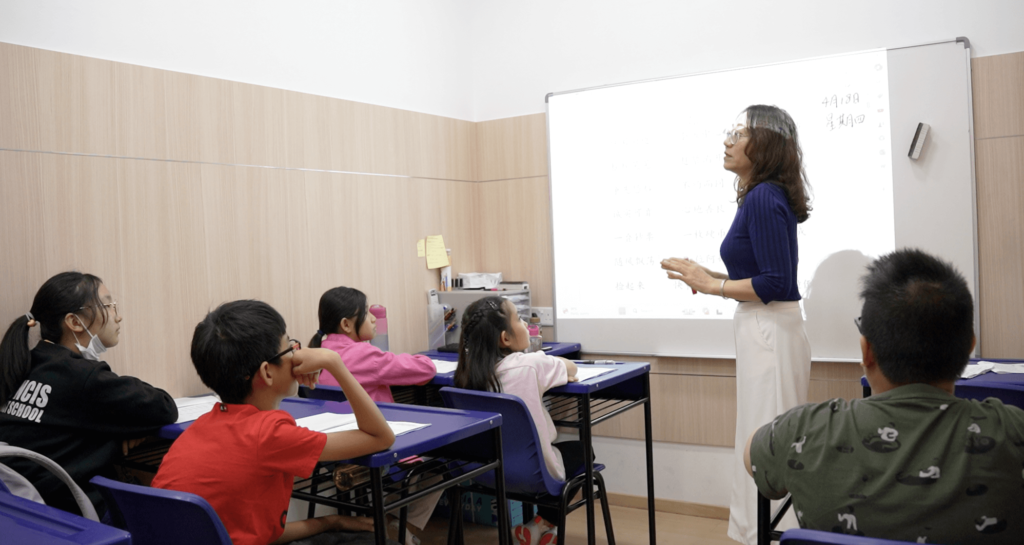
Higher Chinese Language is the advanced Chinese Mother Tongue pathway for students who have stronger proficiency, aptitude or interest in the language.
It requires more than being able to speak Mandarin comfortably.
Students encounter more demanding vocabulary, deeper reading and interpretation, more sophisticated written expression and greater expectations in oral communication and language application.
At secondary school, MOE describes Higher Mother Tongue Language as giving students the opportunity to study Chinese, Malay or Tamil at a more advanced level. It is offered as a four-year course leading to the Singapore-Cambridge Secondary Education Certificate examination in Secondary 4.
This is why some children appear strong in Chinese during the earlier primary years but find the subject much more demanding later.
The language becomes less concrete. Reading passages become more complex. Students are expected not only to understand information but also to compare, summarise, infer, explain and express viewpoints more precisely.
Higher Chinese therefore tests both language ability and the student’s ability to use that language for increasingly sophisticated thinking.
What Is the Difference Between Higher Chinese and Standard Chinese?
Higher Chinese and standard Chinese share the same language foundations, but Higher Chinese generally requires greater depth and independence.
A student studying standard Chinese still needs vocabulary, comprehension, writing, oral communication and listening skills.
Higher Chinese asks students to apply those abilities at a more advanced level.
Vocabulary becomes broader and more abstract. Reading requires deeper interpretation. Written responses need greater precision. Composition involves increasingly mature ideas and language. Secondary Higher Chinese also introduces more demanding text types, grammar and summarisation.
Yu Cai’s own secondary Chinese guidance describes Higher Chinese students as needing wider vocabulary, deeper comprehension analysis, stronger writing and more developed oral responses than students studying standard Chinese.
The difference is therefore not simply the number of worksheets or the difficulty of individual words.
It is the overall depth at which the student must understand and use Chinese.
This also explains why speaking Mandarin at home does not automatically make Higher Chinese easy.
A student may communicate naturally with family members but still struggle to summarise an article, construct an argument or select sufficiently precise language in formal writing.
When Can Students Begin Higher Chinese in Primary School?
Higher Mother Tongue does not necessarily begin only in Primary 5.
MOE states that schools may offer Higher Mother Tongue Languages from Primary 3 onwards. At the end of Primary 4, the school recommends the most suitable Primary 5 subject combination based on the child’s learning needs and Mother Tongue results, and that combination may include Higher Mother Tongue Language.
The exact pathway can therefore differ between schools.
Yu Cai’s dedicated Higher Chinese tuition pathway currently begins at Primary 5, followed by Primary 6 and then Secondary 1 to Secondary 4.
Parents should distinguish between the school subject pathway and the tuition provider’s programme structure.
If a child is already studying Higher Chinese before Primary 5, parents can ask Yu Cai directly which programme would best match the student’s current level.
Who Can Take Higher Chinese in Secondary 1 From 2026?
There is an important change for the 2026 Secondary 1 cohort.
Higher Mother Tongue eligibility is no longer dependent on the student’s overall PSLE score.
Students who obtain AL1 or AL2 in PSLE Mother Tongue Language, or Distinction or Merit in Higher Mother Tongue Language, may offer Higher Mother Tongue at the start of Secondary 1.
MOE also states that schools have flexibility to allow students who do not meet those criteria to take Higher Mother Tongue if they are assessed to have sufficiently high ability and interest in the language and can cope with the required learning load.
This change gives more students an opportunity to pursue Higher Chinese based on their strength in Mother Tongue rather than their overall PSLE performance.
For parents, however, eligibility and suitability are not exactly the same question.
A student may qualify but still need to consider whether they enjoy Chinese, can manage the workload and are prepared for the increased reading and writing demands.
Does Every Higher Chinese Student Need Tuition?
No.
A student who is keeping pace with schoolwork, understands corrections, revises vocabulary independently and remains reasonably confident may not need another weekly class.
Additional tuition becomes more useful when a specific problem continues despite normal school teaching and independent revision.
For example, a student may repeatedly lose marks because comprehension answers do not address all parts of the question.
Another may have strong ideas but insufficient vocabulary to express them.
Another may know many words but struggle to organise a composition.
A secondary student may have good reading ability but consistently find argumentative writing difficult.
The decision should therefore start with identifying the learning gap.
Tuition should solve a problem, not simply add more work.
The Five Higher Chinese Learning Gaps
Most students who struggle with Higher Chinese are not equally weak in every area.
A more useful approach is to identify whether the main difficulty lies in vocabulary, comprehension, writing, oral expression or listening.
Vocabulary and Language Application
Vocabulary is the foundation for almost every other component.
When students do not understand a word, reading becomes harder. When their active vocabulary is limited, composition and oral expression become repetitive.
Higher Chinese vocabulary also becomes increasingly abstract as students grow older.
Yu Cai’s Primary 5 Higher Chinese programme specifically identifies P5 as an important stage for vocabulary growth. Its curriculum notes that students encounter both a larger number of words and increasingly abstract meanings. The programme uses explanation, exercises and revision to help students understand and apply new vocabulary.
By Primary 6, the focus includes revising and consolidating vocabulary accumulated over previous years.
Secondary Higher Chinese extends language work further through textbook vocabulary, idioms and grammar.
The important distinction is between recognising a word and knowing how to use it.
A student may remember a definition yet still choose the wrong word in a composition because they do not understand context or nuance.
Good vocabulary teaching should therefore cover meaning, usage and repeated application rather than relying only on memorisation.
Reading Comprehension
Many parents hear the same complaint:
“I understood the passage, but I still lost marks.”
That can happen because understanding a passage and answering a comprehension question are related but separate skills.
Students must first understand the text.
They then have to identify exactly what the question is asking, locate relevant information, decide whether inference or explanation is required and express the answer with enough precision.
Yu Cai’s Primary 5 Higher Chinese curriculum develops event sequencing, comparison of viewpoints and character changes, summarisation, identification of themes and expression of opinions about the text.
At Primary 6, Yu Cai places greater emphasis on understanding answering methods in relation to scoring points.
For example, if a question asks how a character changed, an incomplete answer may describe only what the character was like at the end.
A stronger answer may need to explain both the earlier and later behaviour and identify what caused the change.
The student may understand the story perfectly but still lose marks because only part of the question was answered.
This is why comprehension tuition should teach reasoning and answer construction, not simply provide model answers after the exercise is completed.
Composition and Written Expression
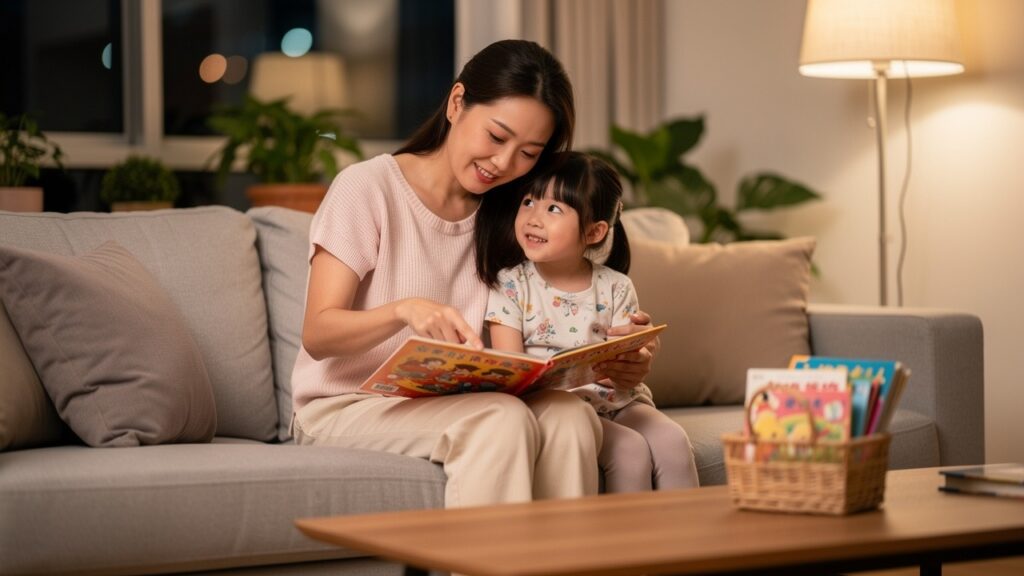
Higher Chinese composition requires students to generate, select and organise ideas before expressing them effectively.
Yu Cai’s Primary 5 and Primary 6 Higher Chinese programmes include situational composition and complete-article writing. Students learn to select suitable material according to the topic and connect it with experience and existing knowledge so the final piece is specific and meaningful.
Vocabulary accumulation remains useful.
Idioms, expressive phrases and stronger sentences can improve writing.
However, good phrases should support the story or argument rather than replace it.
Consider a student who memorises an elaborate description of nervousness.
The phrase has little value if it is inserted into every composition regardless of whether the character actually feels nervous.
A stronger writer first understands the situation and then selects language that fits.
At secondary level, the writing demands widen considerably.
Yu Cai’s Secondary 1–4 Higher Chinese programme includes personal emails, business emails, forum writing, narrative essays, expository essays and argumentative essays, together with rhetorical techniques and detailed description.
This means older students cannot rely only on being good storytellers.
They need to adjust structure, tone and reasoning according to the type of writing required.
Oral Expression
Higher Chinese oral performance involves more than speaking Mandarin fluently at home.
Students need to understand the topic, organise ideas quickly, select appropriate language, explain their reasoning and respond to different viewpoints.
Yu Cai’s Primary 6 curriculum states that students learn to choose speech content and language according to the situation and audience, express opinions and respond appropriately to other people’s views. Video-based conversation preparation is also included.
At secondary level, the programme continues with oral examination training and answering techniques.
Students who understand Chinese but give very short answers may need practice developing an idea.
Instead of saying only that they agree with something, they need to explain why, provide a relevant example and respond naturally when another perspective is introduced.
Regular discussion can therefore help students develop thinking as well as spoken language.
Listening Comprehension
Listening can be overlooked because parents sometimes assume that children who hear Mandarin regularly will automatically perform well.
Examination listening places different demands on the student.
They need sustained concentration, accurate interpretation and the ability to distinguish relevant details quickly.
Yu Cai includes listening-comprehension training across its Primary 5, Primary 6 and secondary Higher Chinese programmes.
A balanced Higher Chinese programme should therefore treat listening as a skill that can be developed rather than something students either naturally possess or do not.
What Does Higher Chinese Tuition Look Like in Primary 5?
Primary 5 is an important transition because vocabulary and comprehension become noticeably more demanding.
Yu Cai’s P5 Higher Chinese programme places substantial emphasis on vocabulary growth and increasingly abstract meanings. Students are taught through explanations, exercises and revision so they can apply new language rather than encounter each word only once.
Reading also becomes more analytical.
Students learn to organise events, compare content and viewpoints, analyse character changes, summarise ideas, identify themes and form opinions about what they read.
Writing moves beyond simple picture-based description into situational composition and complete articles.
Students therefore need stronger learning habits, not simply more revision time.
A Primary 5 child who begins learning how to revise vocabulary, break down comprehension questions and plan writing is building foundations that become especially important in Primary 6.
Parents should therefore look at how the child studies rather than waiting only for the final examination score.
What Changes in Primary 6 Higher Chinese?
Primary 6 is largely about consolidation and greater precision.
Yu Cai’s P6 programme revisits vocabulary from earlier years and continues the reading and writing approach developed in Primary 5. It places additional emphasis on understanding answering methods and scoring points.
The programme covers vocabulary revision, reading-comprehension answering techniques, language application, dialogue completion, written responses, situational composition, complete articles, oral training and listening comprehension.
For students, the challenge is not necessarily learning a completely new set of skills.
It is using existing skills consistently under greater pressure.
They need to read efficiently, understand what the question requires, select the relevant information, develop writing ideas and manage time without rushing the final components.
Good Primary 6 tuition should therefore strengthen judgement as well as knowledge.
The aim is to help the student decide what to do when facing the question independently.
How Does Secondary Higher Chinese Become More Advanced?
Secondary Higher Chinese requires students to work with Chinese at a more mature intellectual level.
MOE describes secondary HMTL as an advanced four-year Mother Tongue course leading to the Secondary Education Certificate examination in Secondary 4.
Yu Cai’s Secondary 1–4 Higher Chinese curriculum develops reading, writing, speaking and listening progressively. It includes textbook vocabulary and idioms, grammar, long-text summarisation, rhetorical techniques, detailed description, personal and business emails, forum writing, narrative essays, expository essays, argumentative essays, oral examination techniques and listening comprehension.
This breadth means a student cannot depend on only one strength.
A strong storyteller may struggle with argumentative writing.
A student with extensive vocabulary may have difficulty organising a long summary.
Someone who speaks confidently may still make grammatical errors in formal writing.
Secondary tuition should therefore become increasingly diagnostic.
Teachers should identify which component is limiting performance instead of treating “Higher Chinese” as one single weakness.
Students should also become more independent over time.
By the upper-secondary years, they should increasingly recognise why an argument is underdeveloped, why a summary contains unnecessary detail or why the same language error keeps recurring.
Should My Child Continue Higher Chinese?
This is a different question from whether the child needs tuition.
A student may be struggling temporarily but still be well suited to Higher Chinese.
Another student may technically be eligible but find that the subject creates a learning load that is difficult to sustain alongside the rest of the curriculum.
Parents should consider several factors together.
Look at whether the student still has interest in Chinese, whether difficulties are concentrated in one area or appear across the entire subject, whether performance is improving with support and whether the workload is affecting other subjects or general wellbeing.
Also consider the child’s willingness to read, practise and correct mistakes independently.
A temporary drop in marks does not automatically mean the student should stop Higher Chinese.
Likewise, continuing simply because the child qualified for the subject is not always the best decision.
For decisions about subject suitability, parents should discuss the situation with the student’s school because schools can assess the child’s overall curriculum load and learning progress.
Tuition should support an educational decision, not make that decision on behalf of the family.
What Should a Good Higher Chinese Tuition Programme Cover?
A strong programme should not simply make schoolwork harder.
It should identify why the student is losing marks and teach them what to do differently.
Vocabulary should include understanding and application rather than memorisation alone.
Comprehension should teach how to interpret questions and structure answers.
Writing should develop planning, relevance, organisation and language rather than simply supplying model phrases.
Oral lessons should give students enough opportunity to develop and defend opinions.
Listening should receive deliberate practice instead of being assumed.
Parents should also ask how these components change from one level to the next.
A Primary 5 student and Secondary 3 student should not simply receive the same teaching model with harder worksheets.
How Important Is the Higher Chinese Teacher?
Teacher quality matters particularly in Higher Chinese because students often need explanations that an answer key cannot provide.
A student may know that their answer is wrong but not understand why it is incomplete.
Another may produce an essay filled with sophisticated vocabulary that still lacks development.
A good teacher should be able to identify the underlying problem and explain it in a way that the individual student understands.
Yu Cai states that it uses a rigorous teacher-selection process and that most of its teachers are registered with Singapore’s Ministry of Education. The centre also publishes additional language-proficiency expectations for its Higher Chinese teachers. These are Yu Cai’s own stated teacher credentials and should therefore be considered alongside the individual student’s actual classroom experience.
Parents should pay attention to whether the teacher’s corrections lead to greater independence.
If the student still needs every answer rewritten for them after months of tuition, more teaching is taking place but not necessarily more learning.
Why Is a Trial Class Useful Before Enrolling?
A trial class gives families information that a programme description cannot.
Yu Cai currently advertises complimentary trial classes for prospective students.
During a Higher Chinese trial, observe how the teacher handles errors.
For comprehension, does the teacher simply reveal the correct answer, or explain which part of the question the student missed?
For composition, does the teacher only provide stronger phrases, or help the student improve the underlying idea and structure?
For vocabulary, does the lesson teach context and usage?
For oral work, does the student have opportunities to develop and explain an opinion?
Also consider the difficulty level.
A lesson that feels effortless may not provide enough challenge.
One in which the student understands almost nothing may be too advanced.
After the trial, ask the child what they learned and whether the teacher’s explanation made sense.
That answer is often more useful than simply asking whether they liked the class.
What Questions Should Parents Ask Before Enrolling?
Parents should first ask how the centre determines which class suits the student.
Then ask how compositions and comprehension work are corrected.
Find out whether oral and listening practice are included regularly or concentrated only near examinations.
Ask what happens when a student repeatedly struggles with one component while performing well in others.
Parents can also ask how vocabulary is revised over time and whether teachers track recurring mistakes.
The most useful answers are specific.
A centre should be able to explain what students at that level learn and how the teaching changes as they progress.
How Much Does Higher Chinese Tuition Cost in Singapore?

There is no single meaningful market price because Higher Chinese tuition fees vary according to school level, class size, lesson duration, teacher experience, location, materials and the amount of marking or individual feedback included.
Parents should therefore compare the total learning package rather than only the monthly headline fee.
Ask how many lessons are included in a term, how long each lesson lasts, whether registration or material fees are charged separately and what happens when a student misses a class.
For Higher Chinese specifically, parents should also ask whether composition marking, oral practice or additional examination workshops require separate payment.
Yu Cai does not currently present a single universal Higher Chinese fee across all programmes on the course pages reviewed for this guide, so families should confirm current fees directly with the centre before enrolling.
A cheaper class is not automatically better value if it does not address the student’s weakness.
An expensive class is also poor value when the child receives little meaningful feedback.
What Progress Should Parents Expect From Higher Chinese Tuition?
Progress should not be judged only by one examination score.
Parents can look for changes in the student’s learning behaviour.
A child may begin remembering vocabulary for longer because they understand how words are used.
Comprehension answers may become more complete.
Composition plans may become clearer before writing begins.
Oral responses may become longer and better organised.
Secondary students may begin identifying weaknesses in their own essays before the teacher points them out.
These changes suggest that the student is becoming more independent.
That is an important outcome because the purpose of tuition should eventually be to reduce the child’s dependence on additional explanation.
Parents should be cautious about expecting a fixed improvement within a guaranteed number of lessons.
Progress varies according to the student’s starting point, school level, attendance, revision habits and the nature of the learning gap.
A better question to ask the teacher is:
“What can my child now do independently that they could not do before?”
Where Are Yu Cai Higher Chinese Classes Available?
Yu Cai currently lists four main centres: Woodlands Civic Centre, Northpoint City in Yishun, The Seletar Mall and Yishun Town Square.
The centre also lists several community-based locations in Punggol and Sengkang.
For families in northern and north-eastern Singapore, these locations can make weekly attendance more manageable.
Location should not outweigh teaching fit, but it deserves consideration.
Upper-primary and secondary students may already have substantial homework, CCAs and other commitments. A long cross-island journey every week can make even a strong programme difficult to sustain.
Parents should confirm current Higher Chinese class levels, vacancies and timetables at the preferred location before travelling.
How Does Yu Cai Structure Its Higher Chinese Pathway?
Yu Cai provides Chinese programmes for children aged 4 to 17 and offers dedicated Higher Chinese from Primary 5 through Secondary 4.
Its Primary 5 programme focuses heavily on vocabulary expansion, deeper reading, summarisation, comparison, opinion formation and increasingly advanced writing.
Primary 6 consolidates earlier vocabulary and places greater emphasis on comprehension answering methods, scoring points, writing, oral communication and listening.
The Secondary 1–4 Higher Chinese programme then develops vocabulary and idioms, grammar, long-text summarisation, multiple email and essay formats, oral examination techniques and listening comprehension.
The advantage of this structure is that Higher Chinese is treated as a progression rather than one identical course repeated for several years.
Parents should still reassess fit as the student grows.
Continuity is valuable only when the class continues to address the child’s actual needs.
How Can Parents Support Higher Chinese at Home?
Parents do not need to recreate tuition at the dining table.
Regular exposure and discussion can help.
Students can read age-appropriate Chinese articles, discuss current topics, review vocabulary from class or explain a story they have read.
For comprehension, ask why an answer lost marks rather than telling the child simply to rewrite the model answer.
For composition, encourage the student to explain the storyline or argument before beginning to write.
A child who can organise the idea verbally often finds it easier to organise the written version.
Older students can practise expressing opinions about everyday issues in Mandarin and explaining the reasons behind their views.
Parents who are not confident Chinese speakers can still show interest by looking through corrected work and asking the child to explain what was learned.
The goal is not to provide another Chinese lesson.
It is to encourage the student to take ownership of the learning.
How This Guide Was Developed
This guide combines current Ministry of Education information about Higher Mother Tongue pathways with Yu Cai Education Centre’s published Primary 5, Primary 6 and Secondary 1–4 Higher Chinese curricula.
Official MOE information is used for questions such as eligibility, school-level pathways and the 2026 Secondary 1 changes. Yu Cai’s own programme pages are used when describing what the centre teaches, its programme progression and its current class offerings.
Where a statement relates specifically to Yu Cai’s methodology, teacher requirements or programme structure, it should be understood as information published by the centre rather than a general MOE requirement.
This distinction helps parents separate official education policy from the design of an individual tuition programme.
Frequently Asked Questions About Higher Chinese Tuition in Singapore
What Is Higher Chinese?
Higher Chinese Language is the advanced Chinese Mother Tongue pathway for students with stronger language ability or interest. At secondary level, Higher Mother Tongue is a four-year course leading to the Singapore-Cambridge Secondary Education Certificate examination in Secondary 4.
What Is the Difference Between Higher Chinese and Standard Chinese?
Both develop reading, writing, speaking and listening, but Higher Chinese generally requires broader and more abstract vocabulary, deeper comprehension, more sophisticated writing and greater independence in language use.
When Can Students Start Higher Chinese?
MOE states that schools may offer Higher Mother Tongue from Primary 3 onwards. At the end of Primary 4, the school may recommend Higher Mother Tongue as part of the child’s Primary 5 subject combination based on their Mother Tongue performance and learning needs.
Who Can Take Higher Chinese in Secondary 1 in 2026?
From the 2026 Secondary 1 cohort, students who achieve AL1 or AL2 in PSLE Mother Tongue Language, or Distinction or Merit in Higher Mother Tongue Language, may offer HMTL at the start of Secondary 1 regardless of their overall PSLE score. Schools can also exercise flexibility for other students assessed to have sufficient ability, interest and capacity to manage the learning load.
Does Every Higher Chinese Student Need Tuition?
No. Students who are progressing comfortably and can revise independently may not need additional tuition. Support becomes more useful when a persistent weakness in vocabulary, comprehension, writing, oral expression or listening continues despite school teaching and regular revision.
Should My Child Continue Higher Chinese If They Are Struggling?
A temporary difficulty does not necessarily mean the child should stop. Consider whether the problem is concentrated in one component, whether the student remains interested, whether support is helping and whether the overall workload is sustainable. Families should also discuss subject suitability with the school.
What Does Yu Cai’s Primary 5 Higher Chinese Programme Focus On?
Yu Cai’s Primary 5 programme emphasises vocabulary growth, increasingly abstract meanings, reading comprehension, event sequencing, comparison, summarisation, opinion formation, situational composition and complete-article writing.
What Does Yu Cai’s Primary 6 Higher Chinese Programme Cover?
The Primary 6 programme includes vocabulary review, comprehension-answering methods, language application, dialogue completion, written responses, situational and complete-article writing, oral preparation and listening comprehension.
Does Yu Cai Offer Secondary Higher Chinese?
Yes. Yu Cai currently offers Higher Chinese from Secondary 1 through Secondary 4. Its programme covers vocabulary, idioms, grammar, long-text summarisation, multiple email and essay formats, oral examination techniques and listening comprehension.
What Are the Main Signs My Child Needs Higher Chinese Support?
Common signs include vocabulary being forgotten quickly, repeated comprehension-answering errors, difficulty organising compositions, weak formal writing, short oral responses, difficulty summarising longer passages or declining confidence despite regular school practice.
Can Speaking Mandarin at Home Make Higher Chinese Easy?
Not necessarily. Home conversation helps with exposure and oral familiarity, but Higher Chinese also requires academic vocabulary, deeper reading, formal writing, summarisation and precise comprehension skills.
How Should I Judge a Higher Chinese Trial Class?
Look at whether the teacher explains the reasoning behind corrections, whether the difficulty level suits your child and whether the student has opportunities to practise the components they actually struggle with. The goal is not simply to find the hardest class.
Does Yu Cai Offer a Trial Lesson?
Yu Cai currently advertises free trial lessons for prospective students at its Chinese tuition centres.
Where Are Yu Cai’s Higher Chinese Classes Available?
Yu Cai currently lists main centres at Woodlands Civic Centre, Northpoint City, The Seletar Mall and Yishun Town Square, together with additional community-based locations in the north-east. Families should confirm current Higher Chinese availability at the preferred location.
Conclusion
Higher Chinese becomes easier to understand when parents stop viewing it as simply ordinary Chinese with more difficult vocabulary.
It is an advanced language pathway that requires students to read more deeply, write with greater precision, organise opinions, understand increasingly abstract language and become progressively more independent.
The first step when a child struggles should therefore be diagnosis.
Is vocabulary limiting comprehension?
Does the student understand passages but answer questions incompletely?
Are writing ideas weak, or is the difficulty expressing good ideas in Chinese?
Does the student speak Mandarin comfortably but struggle to organise formal oral responses?
Different problems need different support.
Yu Cai Education Centre provides dedicated Higher Chinese tuition from Primary 5 through Secondary 4, with its published curriculum progressing from vocabulary development and deeper comprehension in P5, through consolidation and answering techniques in P6, to grammar, summarisation and more advanced writing formats at secondary level.
The 2026 Secondary 1 changes also mean that students who perform strongly in Mother Tongue can access Higher Mother Tongue regardless of their overall PSLE score, widening opportunities for children whose language strength may be greater than their overall academic profile.
For parents, the most useful question is therefore not whether a Higher Chinese class looks demanding enough.
It is whether the programme understands why your child is struggling and teaches them what to do differently.
When students begin recognising why an answer lost marks, selecting vocabulary more precisely, organising an essay independently and expressing an opinion with greater confidence, tuition is doing more than providing additional practice.
It is helping the student become less dependent on tuition itself.